Sometimes money plays tricks on your mind. I was paying for groceries last month when my card declined – not because I was broke, but because my subconscious was still running an old program that whispered “you don’t deserve abundance.” Weird, right?
Most of us walk around with mental money blocks buried so deep we don’t even realize they’re there. These aren’t just random thoughts – they’re sophisticated programming installed since childhood that runs automatically without permission. And they’re sabotaging your wealth faster than a hole in your pocket.
The strangest part? You can be doing everything “right” on the surface – working hard, saving, investing – while your subconscious silently undermines it all. But once you identify and reprogram these hidden blocks, money starts flowing with shocking consistency.
What’s Actually Happening in Your Brain’s Money Center
Our brains formed most of our financial beliefs before we turned seven. Seven! Long before we understood compound interest or retirement accounts. These beliefs got installed from offhand comments our parents made, emotions we felt during financial stress, and thousands of subtle cues about what money meant in our household.
Think of your subconscious like an outdated operating system. It’s running perfectly – the problem is it’s running the wrong program. Maybe it’s executing “money is scarce” or “rich people are evil” or “I’ll never have enough” with flawless efficiency. Your conscious mind might be setting wealth goals while your subconscious is simultaneously executing its contradictory program.
The brain doesn’t judge these programs as good or bad – it simply runs them. That’s why willpower alone rarely works for financial transformation. You’re fighting against subconscious programming that operates 24/7 without getting tired.
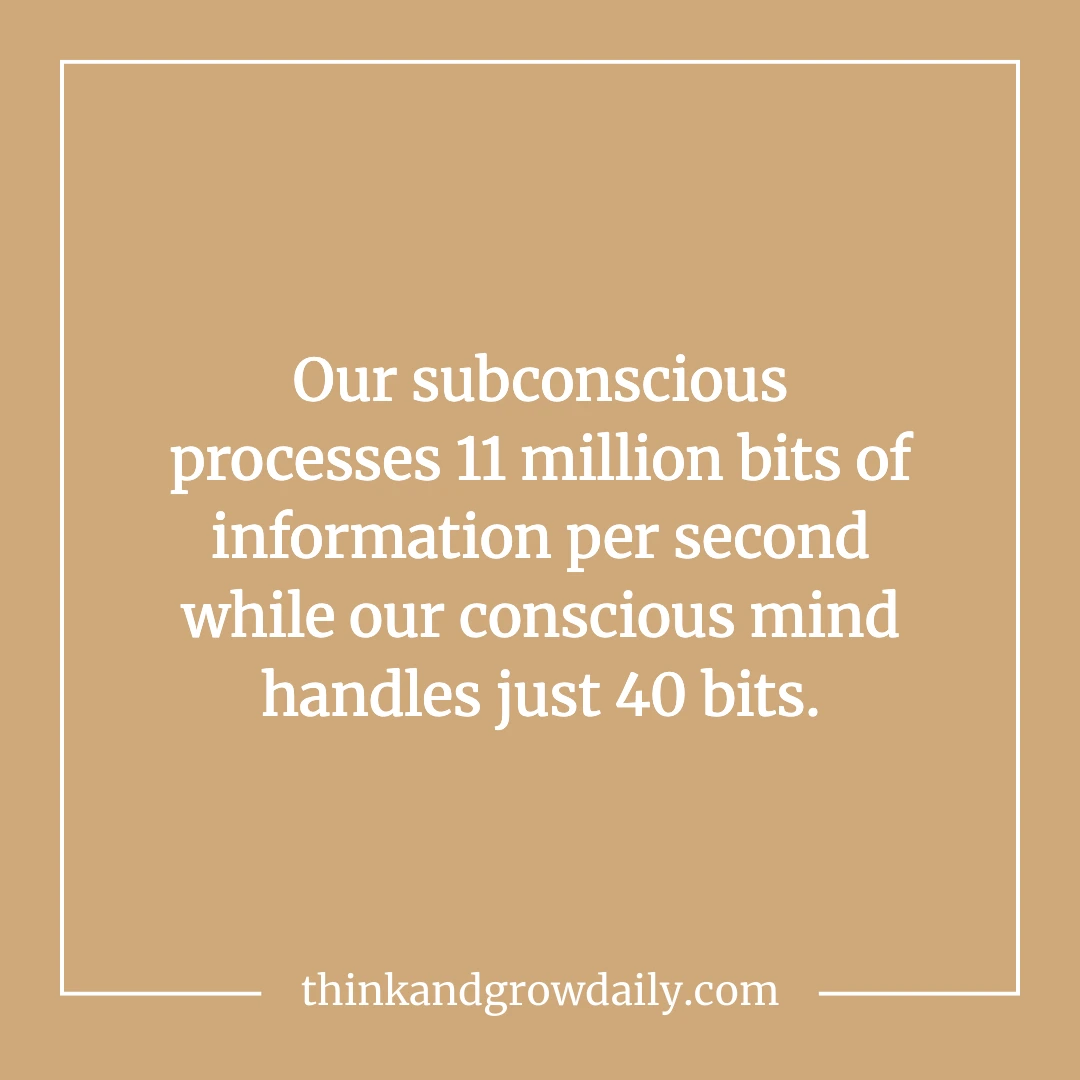
Scientists estimate the subconscious processes about 11 million bits of information per second, while your conscious mind handles just 40 bits. It’s not even a fair fight.

The Weird Money Messages You Never Knew You Absorbed
Our weirdest money blocks usually hide in plain sight. Take a minute and see if any of these sound familiar:
– Feeling guilty when good financial things happen to you – Making progress then mysteriously sabotaging yourself – Anxiety when prices exceed a certain threshold (even when you can afford it) – Difficulty charging what you’re worth – Unexpected expenses appearing just as your savings grow
One client – let’s call her Melissa – came to us frustrated about her income ceiling. Every time she approached $75,000 annually, something would happen: she’d quit, get fired, or sabotage client relationships. During our work, she remembered her dad repeatedly saying, “Nobody in our family ever makes more than $70,000 – that’s not who we are.”
Mystery solved. Her subconscious was loyally protecting her family identity.
Another common pattern? The “money means loss of love” programming. If your caregivers fought about money or you witnessed money causing relationship strain, your subconscious might associate wealth with losing connection. So it protects you by keeping money away.
Clever, but problematic.
3 Proven Techniques to Reprogram Your Subconscious About Money
Now for the good part – how to change these patterns without spending years in therapy.
1. **Pattern interruption** – When you notice a negative money thought, physically snap your fingers or clap your hands while saying “cancel” or “delete.” Sounds silly, but it works because it breaks the neural pattern mid-formation. Follow immediately with your new belief: “I am a money magnet” or whatever feels right. Do this consistently for 21 days.
2. **Visualization with emotion** – The subconscious doesn’t distinguish between vividly imagined events and reality. Spend 5 minutes daily visualizing your desired financial state with intense emotion. Don’t just see the numbers – feel the freedom, security, and joy. Add sensory details: What do you see? Hear? How does it feel in your body? The emotion is what encodes the new programming.
3. **Identity-based affirmations** – Standard affirmations often fail because they conflict with your identity. Instead of “I am wealthy” (which might trigger resistance), try “I’m becoming the kind of person who attracts wealth easily” or “I’m learning to be comfortable with greater abundance.” These bridge-statements ease the transition.
The key is consistency. Reprogramming requires repetition – think of it like physical therapy for your wealth mindset. Ten minutes daily beats two hours once a week.
Your Earliest Money Memory Holds the Key
Close your eyes. What’s your first memory about money? Maybe watching your parents argue about bills? Perhaps feeling shame when you couldn’t afford something friends had? Or excitement when you earned your first dollar?
That memory contains critical coding that likely still affects you today. Write it down in detail. What emotions were present? What conclusions did your young mind draw?
Sharon remembers being 6, wanting a toy at the store, and hearing her mother say, “We can’t afford that – we’re not rich people.” In her child’s mind, this created a belief that certain things were for “rich people” (not her), and wanting them was somehow wrong.
It took decades to recognize how that single moment created an invisible ceiling on what she allowed herself to have. Once identified, she could finally reprogram it.
Your early money memories aren’t just nostalgic stories – they’re the source code of your current financial reality. Examining them with compassion gives you access to the control panel of your subconscious.
Bizarre But Effective: Acting As If You’re Already Wealthy
This technique feels uncomfortable at first, but it works disturbingly well. For one week, make every decision as if you already had abundant wealth. This doesn’t mean spending money you don’t have! It means adopting the mindset of someone with financial security.
How would a financially abundant person: – Talk about money? – Handle unexpected expenses? – Make investment decisions? – Tip at restaurants? – Respond to sales and discounts?
The subconscious learns through experience. By “acting as if,” you’re creating new evidence that contradicts old programming. Your brain begins thinking, “This must be who I am, because this is how I’m behaving.”
One client started keeping a $100 bill in his wallet – not to spend, just to experience what having “extra” money felt like. After years of living paycheck-to-paycheck, this simple act began shifting his scarcity mindset. Within months, his income mysteriously increased as new opportunities appeared.
When It Doesn’t Work (And What to Do Instead)
Sometimes reprogramming efforts seem to fail. Two common reasons:
First, you might have conflicting programs running simultaneously. For example, consciously wanting wealth while subconsciously believing it will make people dislike you. In these cases, address both programs – reprogram the wealth belief while also installing new beliefs about maintaining relationships regardless of financial status.
Second, some blocks serve protective functions. If wealth feels genuinely threatening to your safety or identity, your subconscious won’t let go easily. In these cases, start by addressing the perceived danger directly: “I can be wealthy and still be safe/loved/good.”
Be patient with yourself. This isn’t about forcing change through willpower. It’s about gently rewriting code that’s been running for decades.
The most powerful thing to remember: your current financial situation isn’t a reflection of your worth or potential. It’s simply the output of programming that can be changed. Start reprogramming your subconscious today, and watch how quickly your external reality begins shifting to match your new internal code.
Money is just waiting for you to remove the blocks standing in its way.