Tuesday afternoon, 3:15 PM. My phone rang with that meditation app reminder I’d been ignoring for weeks. But this time was different – I had just bombed a presentation I’d been nervous about for days. The reason? I couldn’t see it working out. Literally.
Visualization isn’t just some woo-woo concept reserved for Olympic athletes or meditation gurus. It’s a fundamental skill that shapes everything from our daily confidence to our long-term achievements. And the kicker? Most of us are terrible at it without even realizing.
When we talk about visualization in the context of manifestation and success, we’re talking about your mind’s ability to create detailed mental images of things that don’t exist yet. Your goals, your dreams, your future reality – all waiting to be imagined before they can materialize.
The good news? You can dramatically improve your visualization skills with consistent practice. The better news? We’ll show you exactly how.
Your Brain Doesn’t Know The Difference
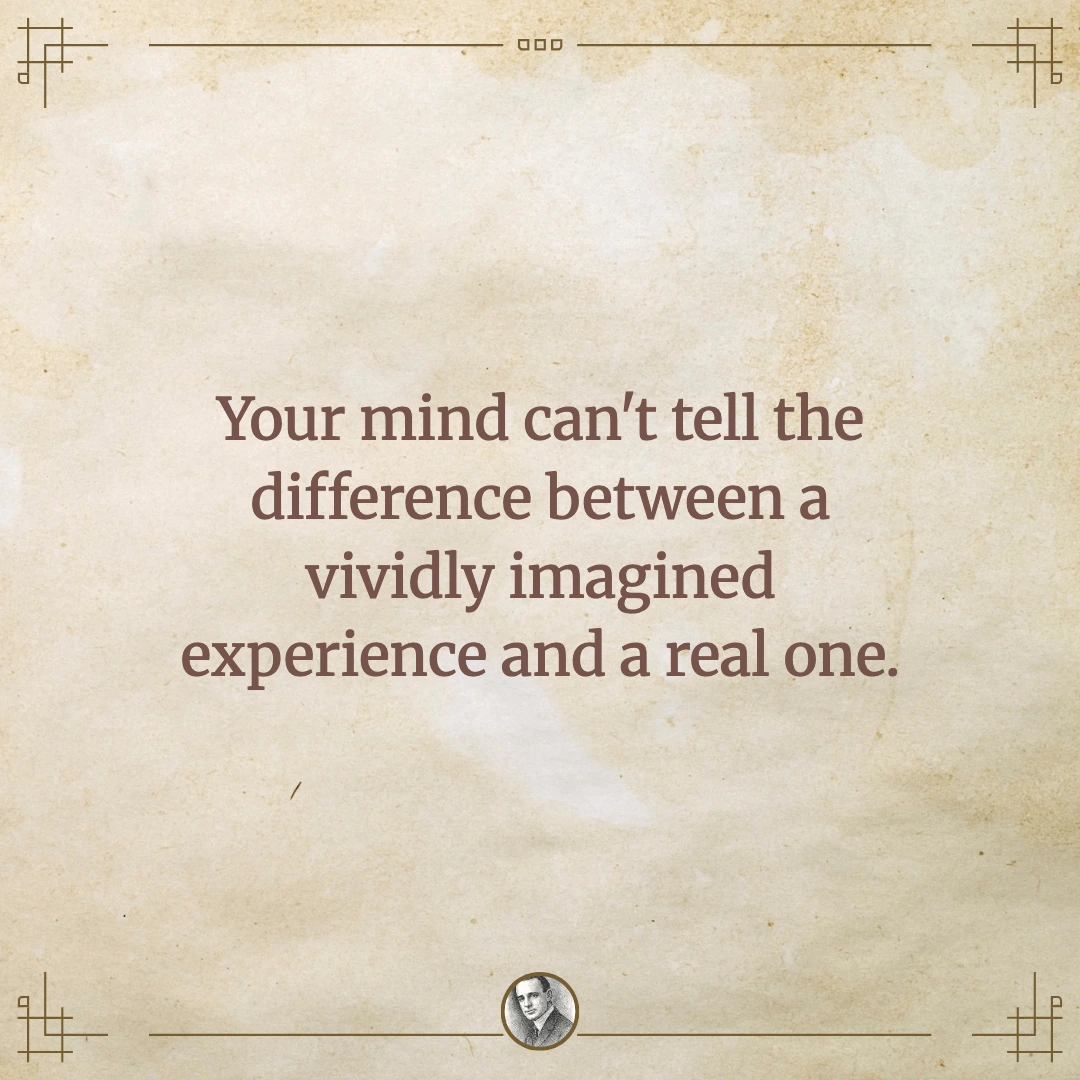
Here’s something wild about your brain: it responds to vivid mental images almost the same way it responds to actual experiences. That’s why you might get sweaty palms just thinking about giving a speech, or why athletes who mentally rehearse their performances actually improve their physical abilities.
Neuroscientists have found that visualization activates many of the same neural networks that actual experience does. When you vividly imagine yourself successfully completing a task, your brain is essentially running a simulation that strengthens the neural pathways needed for the real thing.
This is why Napoleon Hill emphasized creative vision so strongly. He understood that the ability to see your success in your mind first was crucial to achieving it in reality.
And the coolest part? Everyone can develop this skill. Even if you think you’re “not visual” or “can’t see pictures in your head.”
Start Small (Seriously Small)
One mistake we make when trying to improve visualization is jumping straight to the big stuff. We try to visualize our dream life, massive success, or complex scenarios – and then get frustrated when it feels foggy or forced.
Instead, begin with something ridiculously simple. Like an apple.
Close your eyes right now. Imagine holding an apple. What color is it? Is it shiny or dull? Feel the weight in your hand. Now imagine bringing it closer to inspect it. See any imperfections on the skin? Imagine your thumbnail pressing slightly into it.
If that was easy, great! If not – also great! That’s your starting point.
Spend 3-5 minutes daily on these simple visualizations. An orange. Your coffee mug. Your keys. Work with these everyday objects before graduating to more complex scenarios.
I had a client who swore he couldn’t visualize anything. We started with a baseball. After a week of daily practice with just that one object, he could feel the stitches, see the scuff marks, even smell the leather. Two months later, he was visualizing complex business presentations with remarkable clarity.
Use ALL Your Senses (Not Just The Visual)
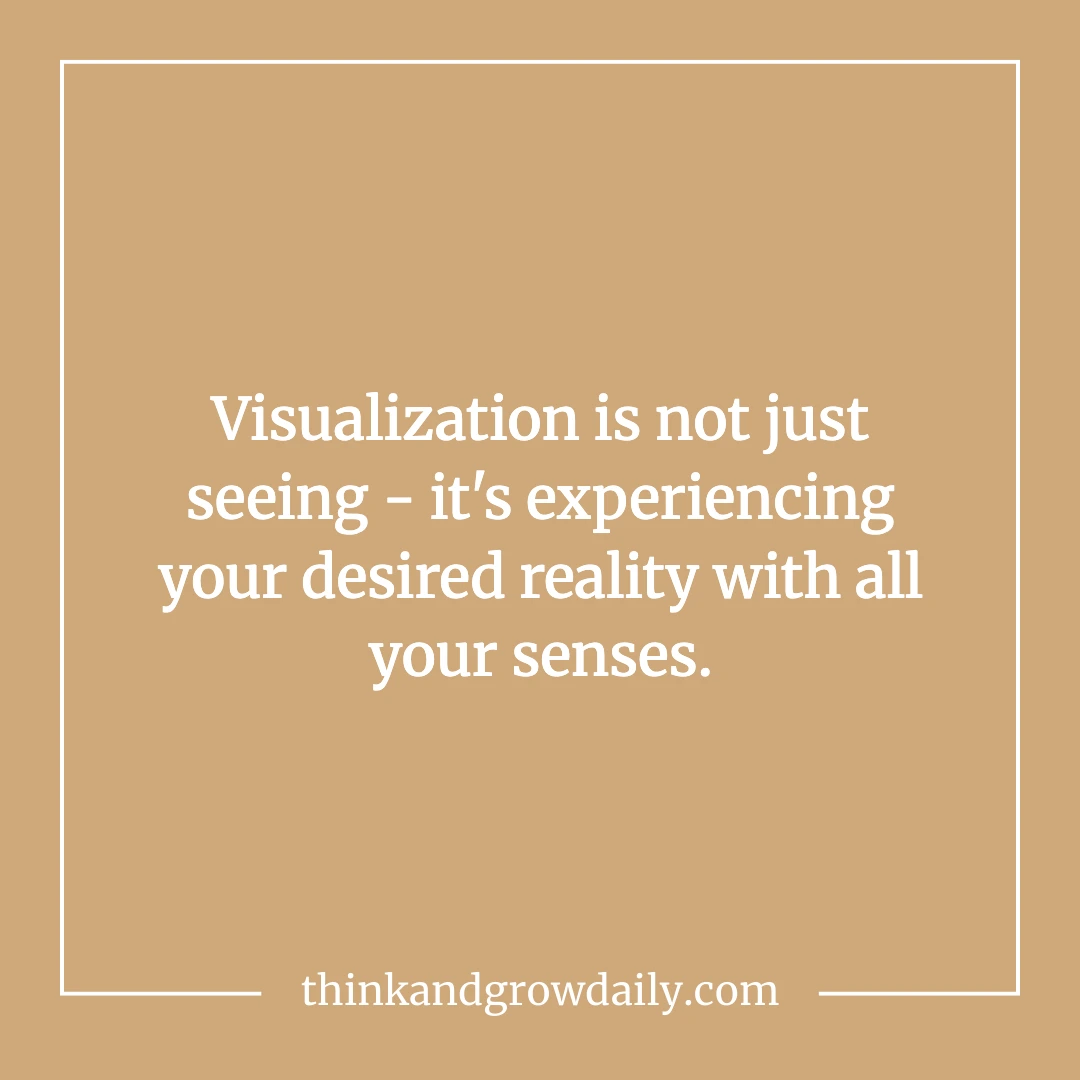
Visualization is badly named. It’s not just about seeing – it’s about experiencing with your entire internal sensory system.
When you’re working to improve your visualization skills, deliberately include:
• What you hear (conversations, music, ambient sounds) • What you feel (textures, temperature, emotions in your body) • What you smell (this one’s surprisingly powerful for making visualizations feel real) • What you taste (if relevant to your scenario) • What you’re doing physically (movements, posture, gestures)
This multi-sensory approach makes your visualizations exponentially more powerful. We worked with an entrepreneur who struggled with investor presentations. When she added the sensation of confident posture, the sound of her steady voice, and even the slight nervous flutter in her stomach to her visualizations, her real-world performance transformed within weeks.
Your brain craves this richness. Feed it.
The Photograph Technique That Changed Everything
So we were testing different visualization methods with our mastermind group last year, and this one technique absolutely transformed how several members approached visualization.
Grab a photograph of yourself – preferably one where you look happy and confident. Study it for about 30 seconds, then close your eyes and recreate it in your mind with as much detail as possible. What were you wearing? What was your expression? How was your posture?
Now for the powerful part: Mentally step into that photograph. See your surroundings from the first-person perspective. Feel the emotions you were experiencing. Hear the sounds around you.
This bridges the gap between external observation and internal experience. Practice this daily, and you’ll notice your ability to create and step into visualized scenarios improving dramatically.
One participant who struggled with creating mental images found that this technique gave her a doorway in. She described it as “borrowing the reality of the photograph until my mind learned to create its own.”
Your Environment Shapes Your Visualization Ability
If you’re serious about improving your visualization skills, look at what’s feeding your mind throughout the day.
Your brain is constantly taking in stimuli and using it as raw material for your imagination. If you consume chaotic, scattered content all day (hello, endless social media scrolling), don’t be surprised when your visualization attempts feel similarly fragmented.
Try this experiment: For one week, be intentional about what you consume. Read fiction that creates vivid imagery. Watch films known for beautiful cinematography. Look at art that moves you. Listen to music that evokes strong imagery.
Then notice what happens to your visualization abilities.
We’re not saying you need to become a monk – just be conscious of what you’re feeding your internal image-making machine. Garbage in, garbage out applies to visualization too.
When It’s Not Working, Do This Instead
Some days, visualization feels impossible. Your mind wanders, images won’t form clearly, or you just can’t concentrate. That’s normal. Even Olympic athletes who use visualization extensively have off days.
On those days, try this:
Write out your visualization as a detailed story instead. Describe the scene, your actions, the outcomes, and especially the feelings involved. Be specific and sensory-rich in your writing.
What this does is engage different neural pathways to accomplish the same goal. You’re still creating the internal experience, just through a different door.
Then, when you return to traditional visualization practice, you might find you’ve bypassed whatever block was in your way.
Alternatively, record yourself describing the scenario you want to visualize, then listen with closed eyes. Sometimes hearing the description helps form the images more easily.
Practice Creates Permanence
Improving your visualization skills isn’t about a one-time effort or a weekend workshop – it’s about consistent, deliberate practice.
The changes happen gradually, then suddenly. You might practice daily for weeks with minimal noticeable improvement, then one day realize you can hold complex, multi-sensory images with remarkable clarity.
The key is sticking with it through the plateau phases. This is where most people quit, not realizing they’re often just days away from a breakthrough.
Start with 5 minutes daily. Set an actual timer. Begin with those simple objects we mentioned, then gradually increase complexity as your abilities strengthen.
Remember: your visualization ability today doesn’t determine your potential. It just shows you where your starting point is. Everyone – yes, everyone – can develop this skill with practice.
And once you do? That’s when manifestation becomes less mysterious and more methodical. That’s when your goals transform from vague wishes to vivid internal experiences awaiting external expression.
So grab that apple. Or baseball. Or coffee mug. Your journey to improved visualization – and everything that comes with it – starts with something simple, today.