I was staring at that rejection email on a Thursday night, ice cream melting beside my laptop. My third attempt at that big project – rejected. Again.
Most of us are taught from an early age that perfection is the goal. Get perfect grades. Have the perfect appearance. Create the perfect work. But what if this obsession with perfection is actually destroying our self-confidence instead of building it?
This week we’re diving into Napoleon Hill’s Self-Confidence Formula, and there’s something important we need to address first: The myth of perfection is the enemy of true, unshakable confidence.
The Weird Relationship Between Imperfection and Confidence
Let’s be honest – nothing kills confidence faster than thinking you need to be flawless. The most confident people we know aren’t perfect at all. They mess up regularly. They have weird quirks. They sometimes wear mismatched socks.
But here’s what they understand: Confidence isn’t built on perfection – it’s built on knowing you’ll be okay even when things get messy.
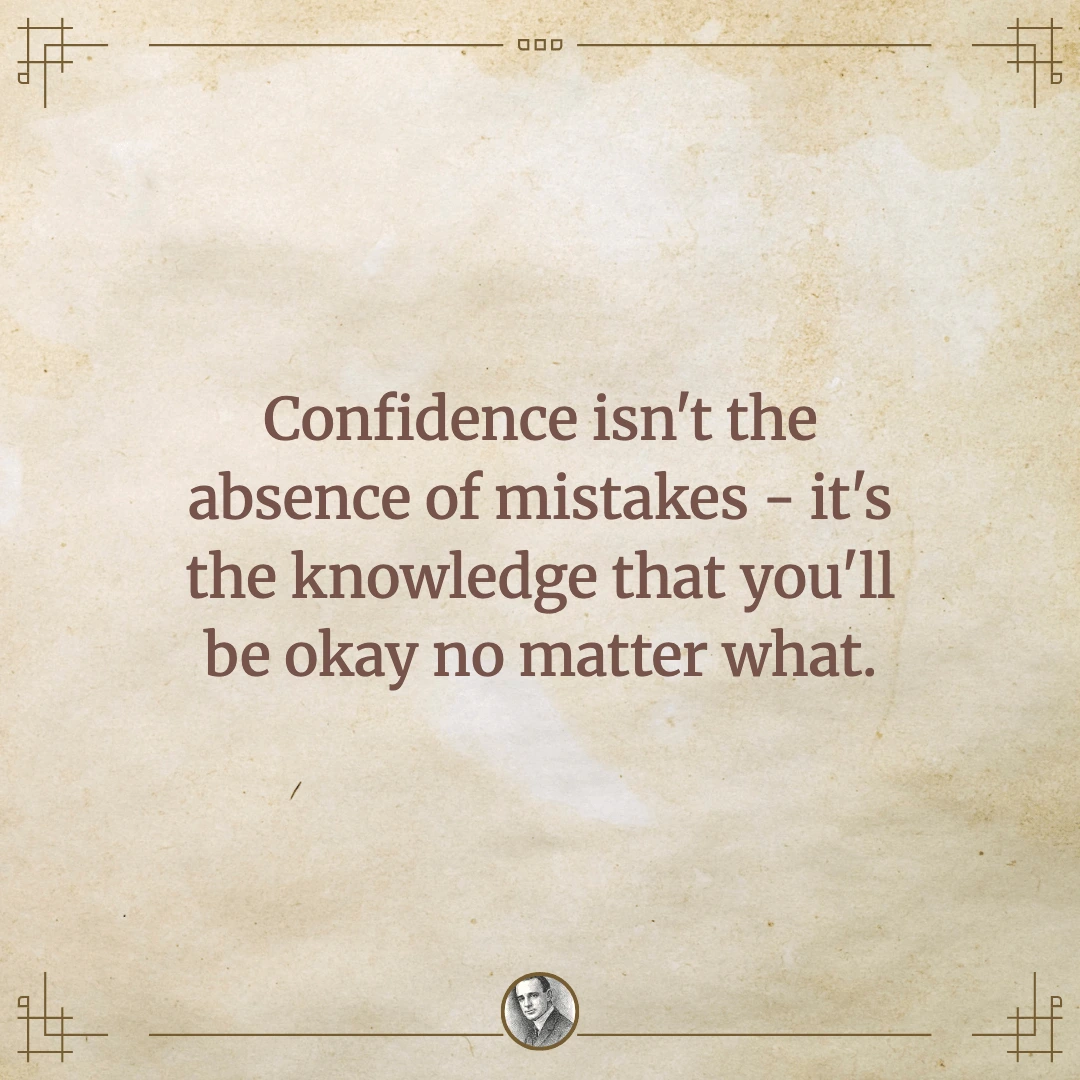
That’s worth repeating. Confidence isn’t the absence of mistakes – it’s the knowledge that you can handle whatever comes after the mistake.
When we interviewed successful entrepreneurs for our podcast last year, almost all of them pointed to major failures as the moments their confidence actually grew. Not when everything went according to plan. One woman told us her business collapsing was “the best thing that ever happened to my self-belief.” Weird, right?
By embracing imperfection, we give ourselves permission to try things where we might fail – which is exactly where growth happens.
Napoleon Hill’s Secret to Self-Confidence (Hint: It’s Not Perfection)
Napoleon Hill interviewed over 500 of the most successful people of his time, and guess what he didn’t find? Perfect people.
What he did discover was that these individuals had developed what he called a “Self-Confidence Formula” – a set of principles they used to build unshakable belief in themselves despite their flaws and failures.
Hill’s formula wasn’t about eliminating imperfection. It was about creating such strong self-belief that imperfections became irrelevant. These people knew they weren’t perfect, but they refused to let that stop them.
One of Hill’s most successful subjects told him: “I have failed so many times I’ve lost count. But I never once doubted I would eventually succeed.” That’s the essence of the self-confidence formula – not the absence of failure, but the presence of unwavering faith in yourself.
Hill himself struggled with speech impediments and lack of formal education – imperfections that could have derailed his career. Instead, he embraced these challenges and built confidence through persistent action despite them.
Would You Rather Be Perfect or Authentic?
We can only choose one.
Perfectionism creates a gap between who we really are and who we think we should be. This gap breeds insecurity, not confidence. When we embrace imperfection, we close that gap. We become whole.
I remember watching Sharon give a presentation last year where she completely blanked on what she was saying mid-sentence. Instead of panicking, she laughed and said, “And this is where my brain decides to take a coffee break! Let’s see if we can get it back…” The audience loved it. The authenticity in that moment created more connection than any perfect presentation ever could.
That’s the paradox – our imperfections often make us more relatable, more human, more trustworthy. Our quirks and flaws are what make people connect with us.
Look at the most magnetic people you know. Are they perfect? Not even close. But they own who they are – flaws and all. That ownership radiates confidence.
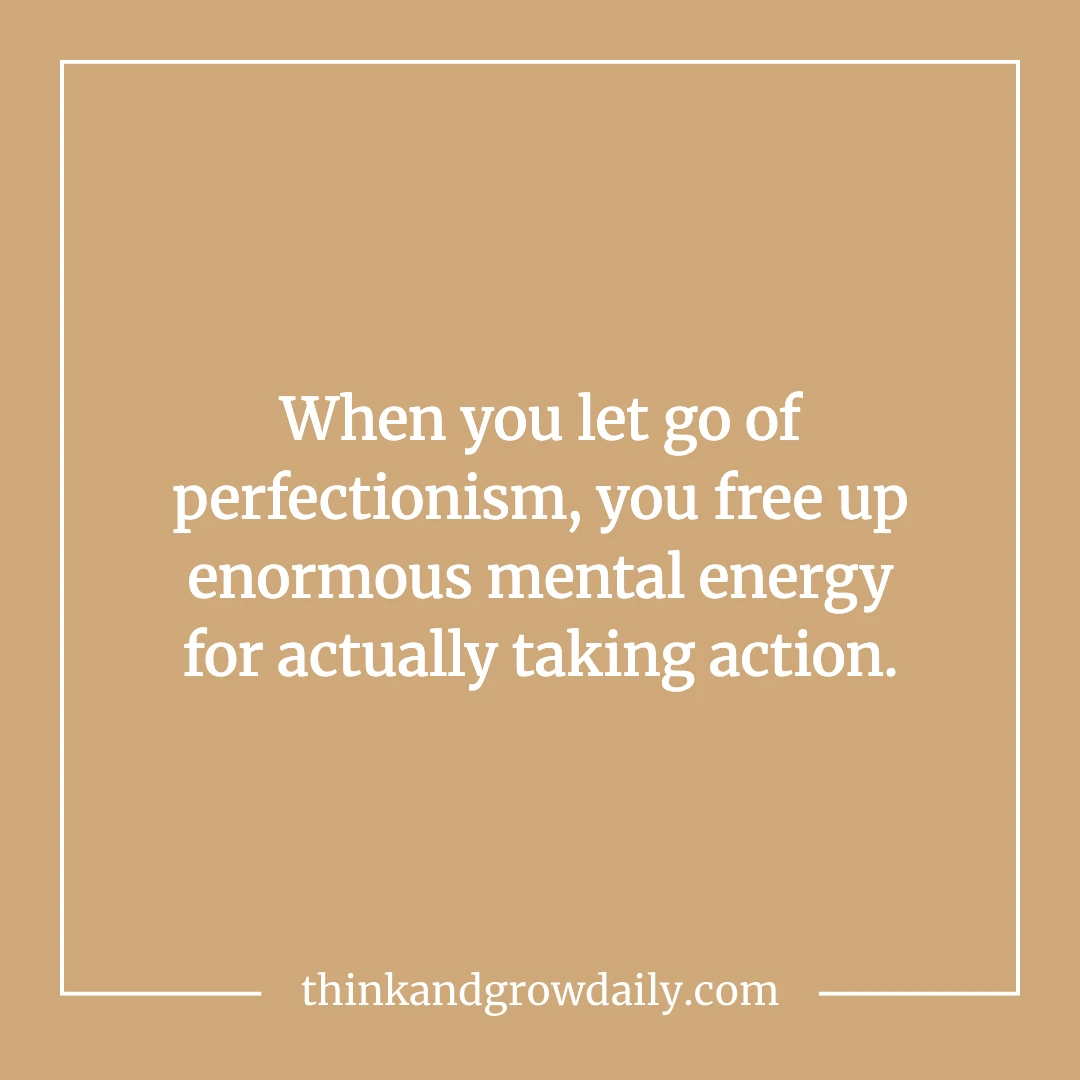
When we let go of perfectionism, we free up enormous mental energy that was being wasted on worry and self-criticism. That energy can now be directed toward actually taking action and building real confidence through experience.
How to Actually Embrace Imperfection (No Fluffy Stuff)
So how do we actually do this in real life? Here are some practical ways to start embracing imperfection as a path to confidence:
1. Start documenting your failures and what they taught you. We keep a “Failure Journal” where we write down what went wrong and what we learned. It’s shocking how quickly this transforms your relationship with imperfection.
2. Practice intentional vulnerability. Share something you’re working on before it’s perfect. Post the draft. Send the unpolished email. Launch the imperfect product. The more you practice being seen in your imperfection, the less power it has over you.
3. Catch yourself in perfectionist thinking. Notice when thoughts like “I can’t do this until it’s perfect” or “They’ll judge me if this isn’t flawless” appear. Question them directly.
4. Create a personal Self-Confidence Formula (we’ll go deeper on this throughout the week). But for now, write down: “I fully accept my imperfections as part of what makes me unique and valuable.”
5. Surround yourself with people who value growth over perfection. Find communities where effort and authenticity are celebrated more than flawless outcomes.
One of our community members, a photographer, told us he started posting his rejected photos alongside his best work. “It completely changed how I see my art,” he said. “I’m not afraid of the ‘bad’ shots anymore, which makes me bolder in trying new things.”
The Science Behind Why This Actually Works
This isn’t just feel-good advice – there’s solid psychology behind embracing imperfection to build confidence.
Research in cognitive behavioral therapy shows that perfectionism is linked to anxiety, depression, and low self-esteem. When we embrace imperfection, we’re actually rewiring neural pathways that previously triggered shame and anxiety.
Carol Dweck’s research on growth mindset demonstrates that people who see failures as learning opportunities rather than character flaws develop greater resilience and, yes, confidence. By embracing imperfection, we naturally shift toward this growth mindset.
There’s also fascinating research on something called the “pratfall effect” – people actually find others MORE likable after they make a mistake. This suggests our fear of showing imperfection is not just psychologically harmful but socially counterproductive.
The bottom line? Embracing imperfection isn’t just nice self-care advice – it’s neurologically sound strategy for building genuine confidence.
Are You Ready to Ditch Perfect?
Napoleon Hill’s Self-Confidence Formula begins with a commitment to yourself and your goals – not to some impossible standard of perfection.
This week, we challenge you to intentionally embrace one imperfection each day. Share something unfinished. Admit when you don’t know. Let yourself be seen in progress.
When we’re no longer paralyzed by the need to be perfect, we’re free to take the bold, consistent action that actually builds confidence. We’re free to become who we’re meant to be.
Tomorrow we’ll break down the exact wording of Napoleon Hill’s Self-Confidence Formula and how to apply it daily. But today, just remember: The path to unshakable confidence isn’t eliminating your flaws – it’s embracing them as part of your unique journey.
Your imperfections aren’t obstacles to confidence. They’re the very path to building it.