I still remember that Monday morning I sat cross-legged on my living room floor, staring at my to-do list with absolute dread. Twenty-seven items. All urgent. None calling to me.
My shoulders felt heavy. My motivation was non-existent. And I knew – trying to force myself through that list would produce mediocre results at best.
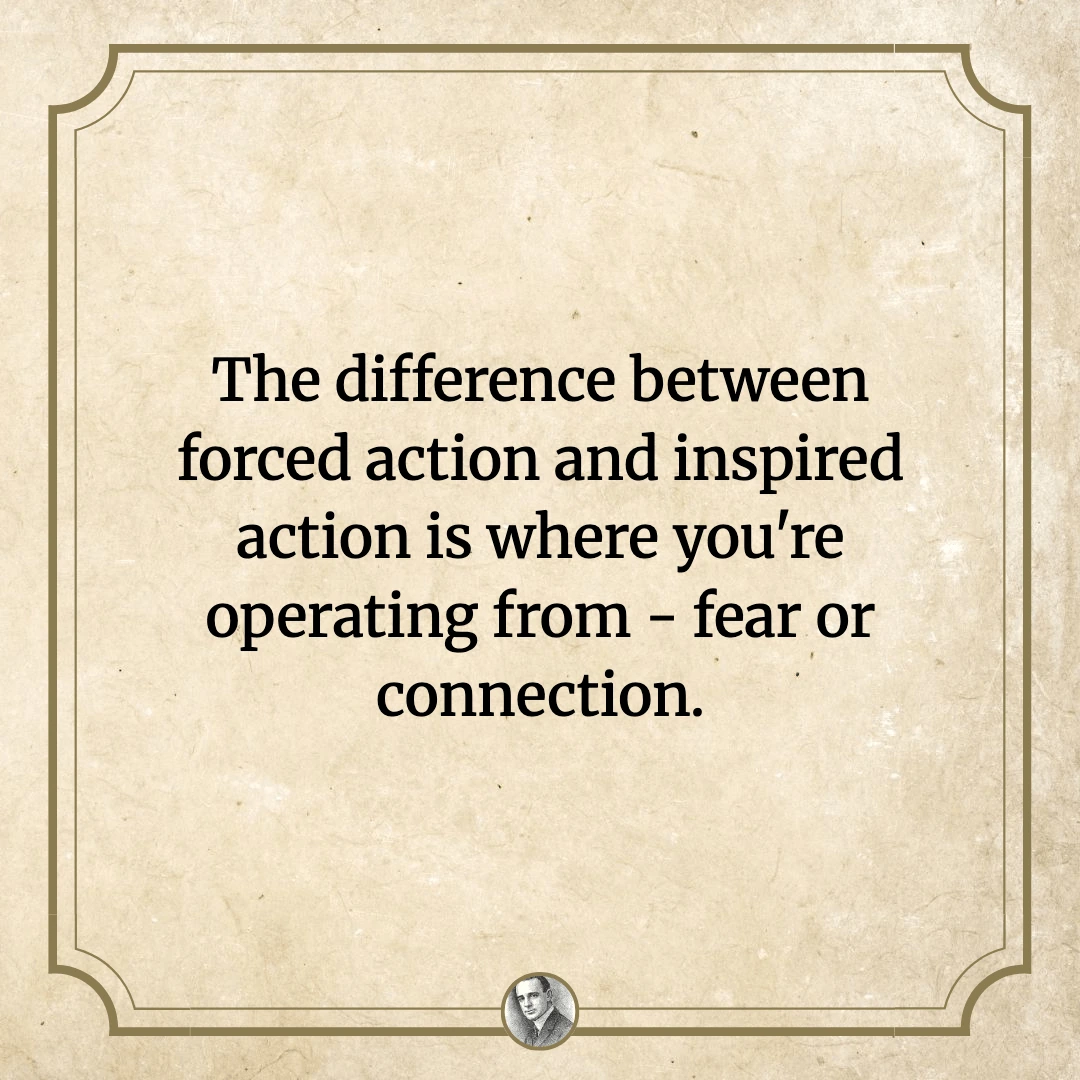
That’s when it hit me. I was approaching action all wrong. I was trying to power through instead of tapping into something deeper. Something I’d read about but hadn’t fully embraced: the difference between forced action and inspired action.
The Quiet Revolution of Spiritual Practice
Let’s talk about spiritual practice for a second. When most people hear those words, they picture someone meditating on a mountain or chanting in a temple. And sure, those count.
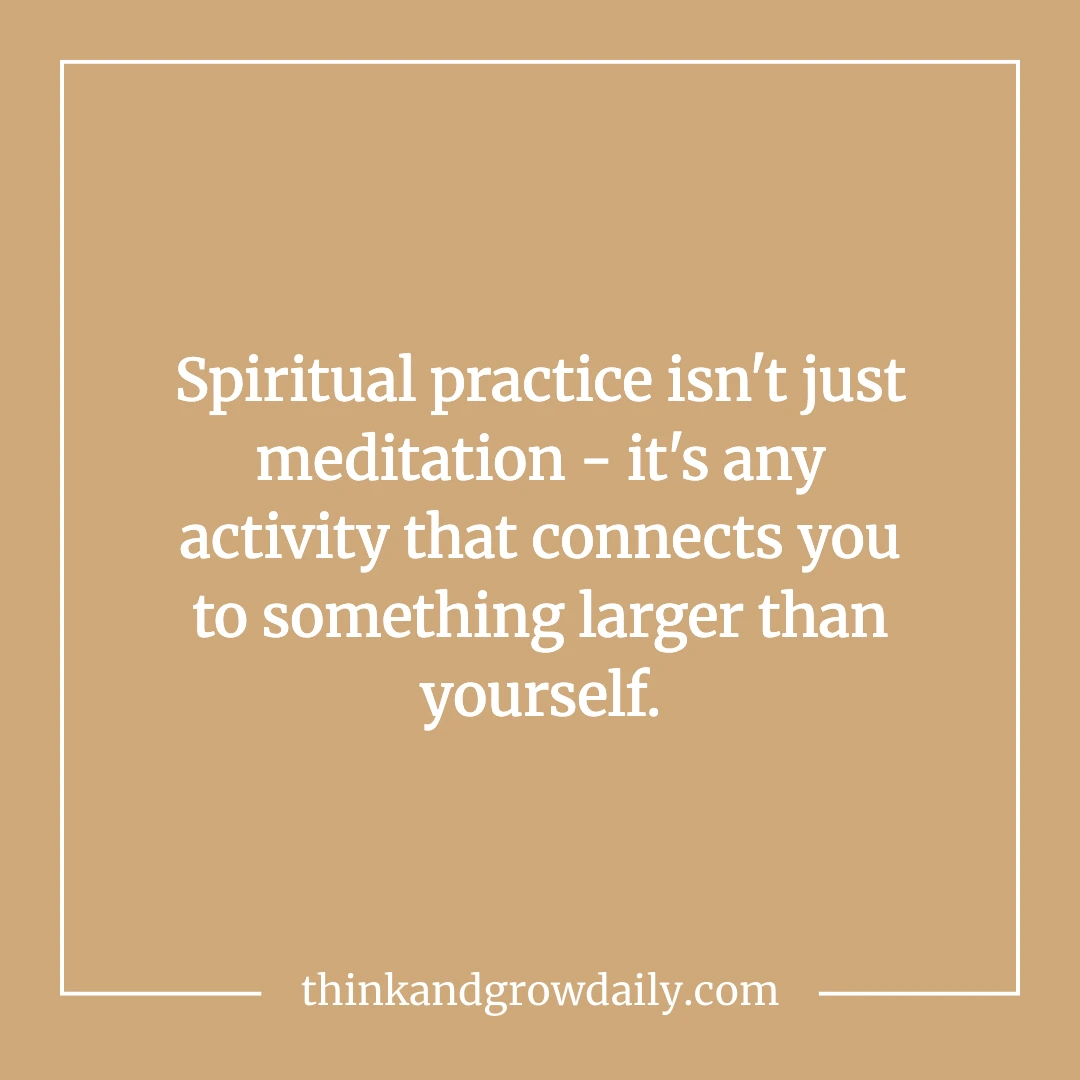
But spiritual practice is so much more practical than we give it credit for. It’s any intentional activity that connects us to something larger than ourselves – whether you call that God, Universe, Source, or simply your higher self.
A daily spiritual practice isn’t some woo-woo luxury. It’s the foundation that makes everything else in your life work better. Including your actions toward your biggest goals.
This connection between spiritual practice and inspired action isn’t talked about enough. We’re either told to hustle harder or to just “trust the universe” – as if those are our only two options!
Real talk: spiritual practice creates the internal conditions where inspired action naturally emerges. It’s not about doing nothing. It’s about doing the right things, at the right time, from the right energy.
When You Can’t Tell If It’s Fear or Intuition
Our friend Mike (not his real name) had been stuck in the same pattern for years. He’d get an idea for his business, feel excited, then immediately get overwhelmed with doubts.
“I can never tell if I’m afraid or if my intuition is telling me to hold off,” he told us over coffee last month.
This is where regular spiritual practice changes everything. When we quiet our minds consistently – through meditation, prayer, journaling, walking in nature, or whatever works for you – we develop a crucial skill: discernment.
Discernment is knowing the difference between: – The voice of fear (which feels constricting and panicky) – The voice of ego (which feels defensive and comparative) – The voice of intuition (which feels calm and certain, even when challenging)
Without a spiritual practice that helps you recognize these different voices, you’re basically driving blindfolded. You might be taking tons of action – but are they inspired actions or reactions?
After Mike committed to just 10 minutes of meditation every morning for three weeks, something shifted. “I started to recognize when I was making decisions from panic,” he said. “And when I was genuinely getting a ‘not yet’ signal from my gut.”
His business decisions improved. His timing got better. And he stopped wasting energy on projects that weren’t aligned.
This is what spiritual practice does – it clears the static so you can hear the signal.
Your Spiritual Practice Doesn’t Need to Look Like Anyone Else’s
Look, I struggled with this for years. I thought spiritual practice meant sitting perfectly still for an hour with zero thoughts. (Spoiler: that’s basically impossible.)
The breakthrough came when I realized spiritual practice can look a million different ways. The test isn’t how it looks – it’s how it feels afterward.
After your practice, do you feel: – More centered? – More connected to your deeper wisdom? – More capable of seeing situations clearly? – More in tune with what truly matters?
If yes, it’s working. Doesn’t matter if it’s “traditional” or not.
Sharon does her spiritual practice while washing dishes. She uses that time to practice gratitude and presence. I do mine through journaling and walking. Napoleon Hill, whose work we reference often, practiced through what he called “sitting for ideas” – a form of receptive meditation.
The form matters less than the consistency. What destroys the benefits faster than anything is treating spiritual practice as an “if I have time” activity instead of a non-negotiable foundation.
Watch What Happens When You Take Action AFTER Spiritual Practice
Spiritual practice without action can become spiritual bypassing – using spirituality to avoid dealing with challenges.
Action without spiritual connection can become anxious hustle – exhausting yourself without real progress.
But combine them? Magic happens.
Try this experiment: Before diving into your workday tomorrow, take 10-15 minutes for some form of spiritual practice. Maybe it’s meditation, prayer, reading something inspiring, or simply sitting in silence. Then notice what happens when you start working.
Many people report: – Better clarity about which tasks actually matter – Surprising insights about problems they’d been stuck on – A sense of flow instead of force – Intuitive timing – knowing when to push and when to pause – Running into just the right person or finding just the right resource
When you’re connected to something larger than yourself, your actions stop being just items to check off. They become expressions of something deeper. Your work becomes infused with meaning beyond the visible results.
Think about some of history’s greatest achievers – from Gandhi to Einstein to Martin Luther King Jr. Their massive external achievements were fueled by rich internal spiritual lives. Their actions weren’t random; they were inspired.
What If You’ve Tried But Can’t Feel Anything?
This happens more than people admit. You sit down to meditate or pray, and you feel… nothing. Just boredom or restlessness.
First, that’s completely normal. Spiritual connection isn’t always a dramatic feeling. Sometimes it’s subtle. Sometimes it feels like nothing at all until you look back later and notice how your day unfolded more gracefully.
Second, if you’re new to spiritual practice, you’re developing a muscle. Would you expect to lift heavy weights on your first day at the gym? Probably not. Spiritual discernment works the same way.
Start with just 5 minutes daily. Be patient with yourself. The connection will strengthen over time.
And remember – the best evidence of effective spiritual practice isn’t some mystical feeling. It’s the quality of your actions afterward. Are they more aligned? More purposeful? More effective with less strain? That’s how you know it’s working.
So What Happened on That Monday?
Remember that Monday morning when I sat staring at my overwhelming to-do list?
Instead of forcing myself to start checking things off, I closed my eyes. Took some deep breaths. Spent 15 minutes in meditation, focusing on my connection to something larger than my stress.
When I opened my eyes, I still had 27 tasks. But I saw them differently. Some no longer seemed necessary at all. Others could wait. And three stood out as genuinely important and aligned with my deeper purpose.
I focused on those three with full presence. They took half the time they normally would. And completing them created momentum that made the rest of the week flow better.
That’s the difference between forced action and inspired action. Same person. Same tasks. Different source of movement.
Spiritual practice isn’t just some nice add-on to your success journey. It’s the foundation that determines whether your actions deplete you or fulfill you as you move toward your biggest dreams.
Give it a try tomorrow. See what happens when you connect before you act. Your results might just transform in ways you never expected.