I once spent three hours trying to remember where I put my car keys, tearing the house apart. They were in my jacket pocket the whole time. My conscious mind was working overtime while my subconscious knew exactly where they were – if only I’d been able to access that information.
This little frustrating moment actually reveals something profound about how our minds work. The subconscious stores everything – every experience, every solution, every resource we need – but we don’t always know how to retrieve it.
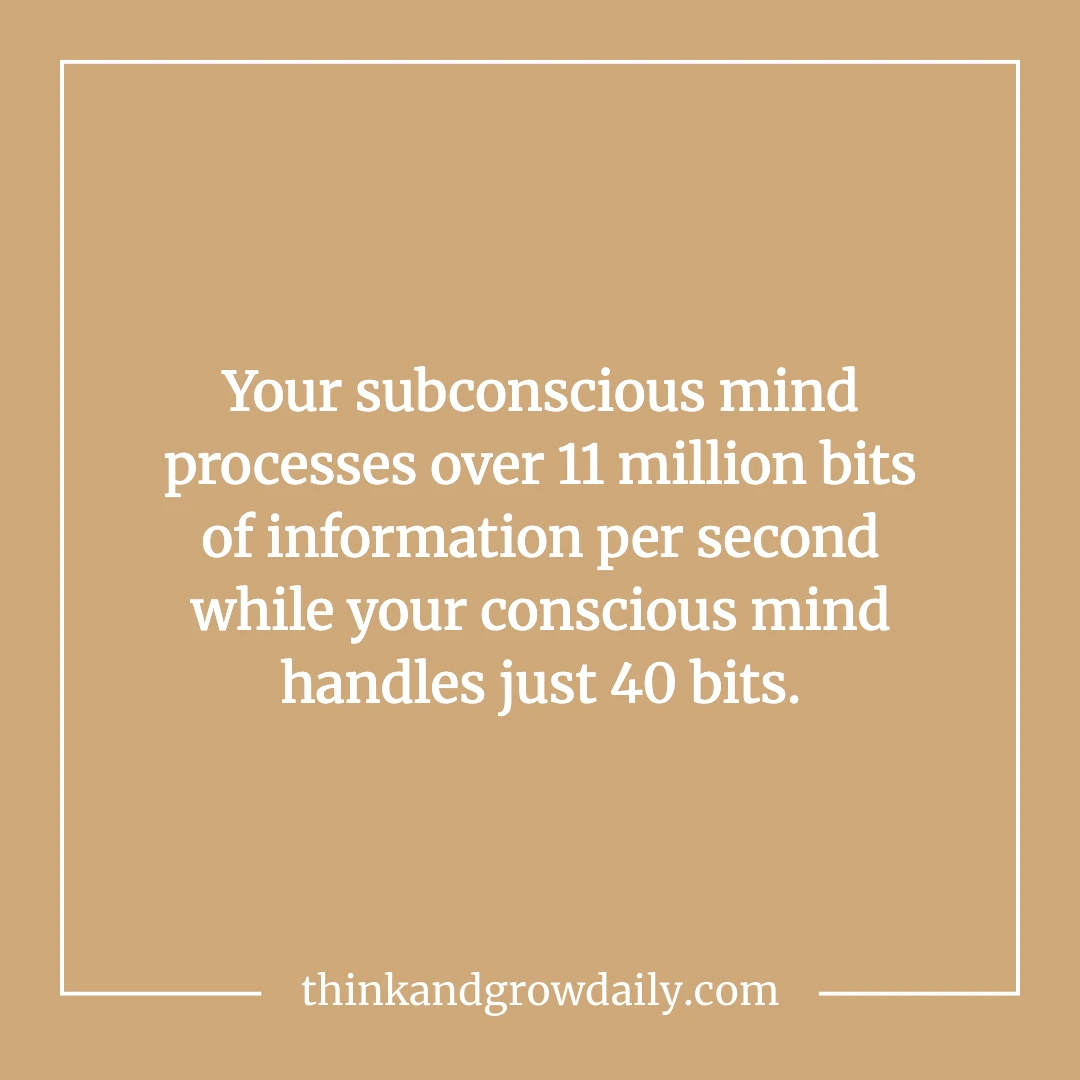
Our subconscious mind is like the most powerful computer on earth, running constantly in the background. It processes approximately 11 million bits of information per second while our conscious mind handles about 40 bits. Let that sink in. The power of your subconscious mind is literally millions of times greater than your conscious thinking.
And yet most of us never learn how to actually communicate with this incredible inner resource. We’re like people with a Ferrari who never figured out how to take it out of first gear. This week, we’re changing that.
Your Subconscious Doesn’t Speak English
First thing to understand – your subconscious doesn’t process information the way your conscious mind does. It speaks an entirely different language.
When you tell yourself, “I want to be successful,” your conscious mind understands perfectly. Your subconscious? Not so much. It needs translation.
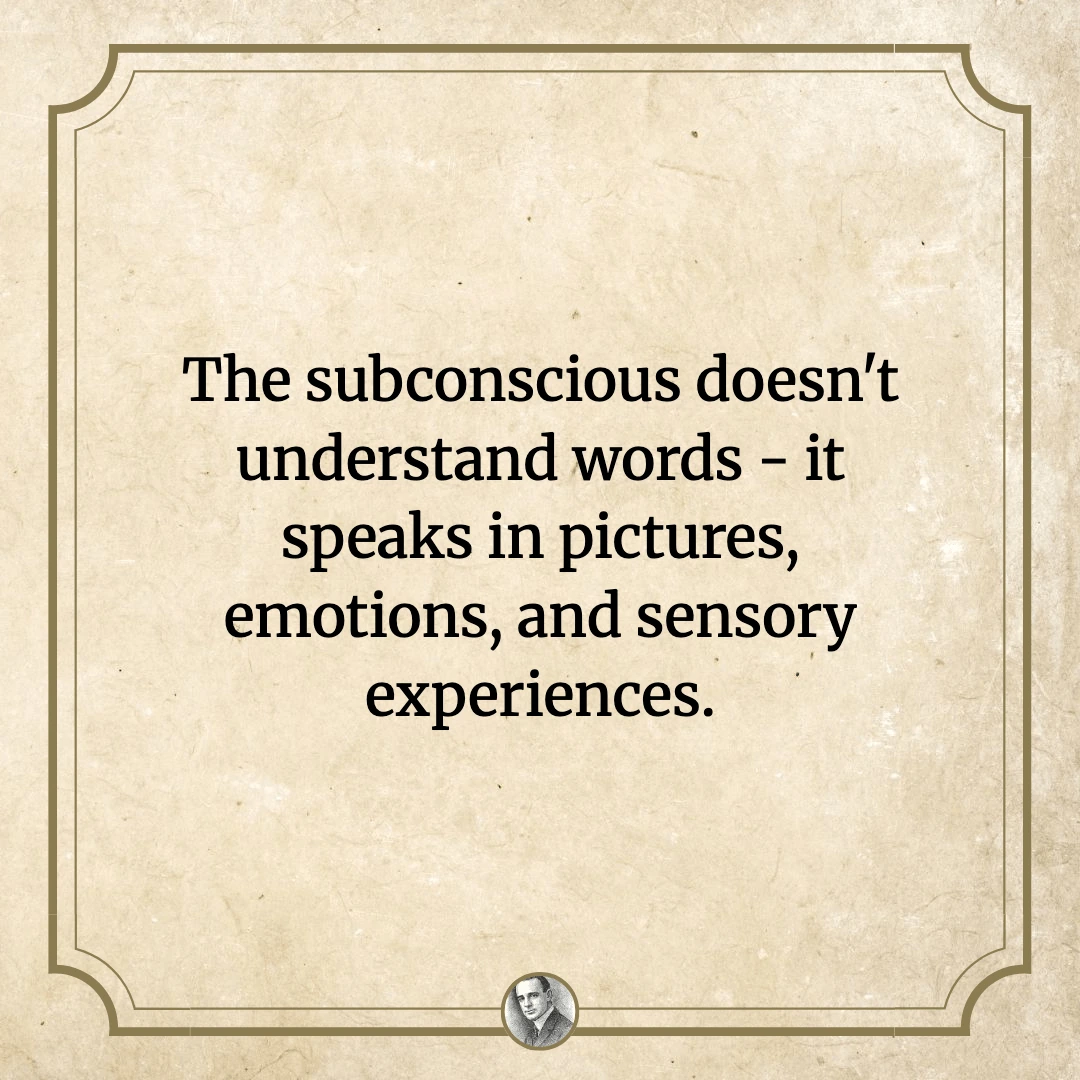
The subconscious communicates through emotions, symbols, and sensory experiences. It doesn’t respond to abstract concepts but to vivid images and feelings. Think about dreams – they’re rarely logical narratives but rather jumbled collections of symbols, emotions, and sensations. That’s your subconscious’s native tongue.
I learned this the hard way. For years I repeated positive affirmations that went absolutely nowhere. “I am wealthy, I am confident, I am healthy.” Sounded good, but nothing changed. My conscious mind was on board, but my subconscious was like, “What language are you speaking?”
When we understand this fundamental difference in communication styles, everything changes. We can stop trying to force our subconscious to learn our language and instead learn to speak its language instead.
Pictures Worth 11 Million Words
Imagine walking into your kitchen right now. What do you see? The color of the countertops, the dishes in the sink, maybe that fruit bowl that’s been sitting there too long?
You just activated your subconscious mind. It can produce detailed, multi-sensory experiences instantly – something your conscious mind could never do with the same richness.
This visualization ability is the primary language of your subconscious. And it’s your most direct line of communication with it.
When Olympic athletes prepare for competition, they don’t just physically train. Studies show they spend almost as much time visualizing their performance in vivid detail. They’re not just daydreaming – they’re programming their subconscious mind for success.
The power of your subconscious mind responds to these mental pictures as if they were reality. It doesn’t distinguish between a vividly imagined experience and an actual one. Both create similar neural patterns in the brain.
This is why visualization works so effectively. Your subconscious accepts the images you feed it and begins to arrange circumstances to match that reality.
So instead of just saying, “I want financial abundance,” close your eyes and see yourself receiving checks in the mail, looking at growing bank statements, or doing whatever you would do if you were financially abundant. Your subconscious will respond to these pictures far more powerfully than to words alone.
Step 1: Speak Its Language
Ready to start programming your inner supercomputer? Let’s get practical.
The first step is translating what you want into the language your subconscious understands. This means converting your desires from abstract concepts into sensory-rich experiences.
Take a goal – any goal. Maybe you want to double your income this year. Great. But saying “I want to make more money” is like speaking English to someone who only understands Mandarin.
Instead, create a detailed scene that represents this goal as already achieved. See yourself opening a bank statement showing the exact amount you desire. Feel the emotions – the relief, the excitement, the sense of accomplishment. Hear what you’d say to yourself or others. Make it as real as possible.
Do this for just 5 minutes each morning. But here’s the key – don’t just passively watch the mental movie. Step into it. Be the star of it. Feel it happening now, not someday in the future.
Your subconscious mind doesn’t recognize time the way your conscious mind does. To it, vivid imagination and reality create similar patterns. By experiencing your goal as current reality, you’re giving your subconscious clear instructions about what to help create.
But there’s a huge trap people fall into here. Your visualization must evoke genuine emotion. Without emotional intensity, it’s just daydreaming. Your feelings are like the power switch that activates your subconscious.
The Gatekeeper: Bypassing Your Critical Mind
So you’ve created these amazing mental images, but something still feels blocked. What gives?
There’s a gatekeeper between your conscious and subconscious mind – the critical factor. This mental bouncer examines every thought and either allows or rejects it based on your existing beliefs.
If you visualize wealth but deep down believe “money is the root of all evil” or “rich people are greedy,” your critical factor will reject your visualization. It protects your subconscious from accepting anything that contradicts your current programming.
This explains why positive thinking alone often fails. You can’t just override decades of programming with a few positive statements.
To bypass this gatekeeper, we need to work with it, not against it. There are three primary ways to do this:
1. Repetition – consistent visualization eventually wears down resistance 2. Emotional intensity – strong feelings can push past the critical factor 3. Relaxed states – when you’re deeply relaxed, the gatekeeper becomes less vigilant
This third approach is especially powerful. Right before sleep and just after waking, you’re in a natural state of heightened suggestibility. Your brainwaves slow down to alpha or theta states, and your critical factor is temporarily lowered.
That’s why reading positive material before bed or visualizing first thing in the morning is so effective. You’re accessing your subconscious when its defenses are naturally lower.
Personally, I keep a notebook by my bed. Last thing before sleep, I write down what I want as if it’s already happened, then close my eyes and feel it as real. Your subconscious works all night processing these instructions.
Step 2: Emotional Fuel
Emotion is the energy that powers your subconscious programming. Without it, your visualizations are like sending emails without hitting the send button – they never reach their destination.
Your subconscious mind is most strongly activated by feelings, not thoughts. The stronger the emotion attached to an image or idea, the more deeply it’s impressed on your subconscious.
This is why traumatic events can create such lasting impressions – they carry extreme emotional intensity. But we can use this same principle constructively.
When you visualize your goals, deliberately amplify the associated feelings. If it’s financial freedom, intensify the feeling of security, freedom, and generosity. If it’s a relationship, fully feel the love, connection, and appreciation.
One trick I use: create a mental “emotion dial” and imagine turning it up during visualization. Start at level 3 feeling, then crank it to 7, then 10. Your body will actually respond with physical sensations as the emotions intensify.
Remember: your subconscious doesn’t know the difference between vividly imagined emotions and real ones. Both create similar chemical responses in your body. Use this to your advantage.
Step 3: Consistent Communication
Consistency beats intensity every time. Five minutes of focused visualization daily will create more change than an hour-long session once a week.
Think of communicating with your subconscious like watering a plant. Moderate, consistent watering helps it grow. Drowning it occasionally doesn’t work.
Create a sustainable practice. Maybe it’s visualizing during your morning shower. Or the last five minutes before sleep. The specific time doesn’t matter – what matters is the consistency.
I’ve found that attaching this practice to something you already do daily – brushing teeth, waiting for coffee to brew, sitting in traffic – makes it much more likely to stick.
Consistency also sends a message to your subconscious that this goal matters to you. Random, sporadic attention signals that it’s not really a priority.
Step 4: Remove the Blocks
If you’ve been working with your subconscious and still not seeing results, you likely have subconscious resistance – beliefs that contradict what you’re trying to create.
The most efficient approach is to identify and neutralize these blocking beliefs. Start by asking: “If there was something in me resisting this goal, what might it be?”
Common blocks include beliefs like: – “I don’t deserve this” – “This isn’t possible for someone like me” – “If I succeed, I’ll lose something important” – “This will change how people see me”
Write down whatever comes up without judgment. Then for each blocking belief, create an alternative that feels believable – not necessarily its opposite.
For example, if you discover “I don’t deserve wealth,” you might create: “I’m learning that it’s safe for me to prosper” or “My success can benefit others.”
These alternative beliefs serve as bridges, helping your subconscious gradually accept new programming without triggering the critical factor.
Step 5: Act As If
Your actions speak directly to your subconscious. When you act in accordance with your desired reality, you send powerful signals to your inner mind.
This doesn’t mean fake it. It means align your behaviors with the person who already has what you want.
If you want financial abundance, how would that version of you treat money? How would they make decisions? What habits would they have?
I once worked with someone who wanted to become a professional speaker. Instead of waiting until he “made it,” he immediately created business cards, set up a basic website, and started introducing himself as a speaker (even though he had only done a few free talks).
Within months, paid opportunities started appearing, because his subconscious and his environment were receiving consistent signals about his identity.
Your subconscious believes what you demonstrate through action. When your behaviors contradict your stated desires, your subconscious gets confused about what you really want.
The Subconscious Partnership
The relationship with your subconscious mind isn’t about control – it’s about partnership. You’re not forcing it to obey your commands. You’re learning to work with its incredible power.
Think of your conscious mind as the captain who sets the destination, and your subconscious as the crew that actually knows how to operate the ship. The captain may decide to go to Hawaii, but without the crew’s cooperation and expertise, that ship isn’t going anywhere.
As you practice these five steps – speaking its language, adding emotional fuel, communicating consistently, removing blocks, and acting as if – you’ll develop an increasingly harmonious relationship with this incredible inner resource.
The power of your subconscious mind isn’t something you need to acquire – it’s already yours. You’re simply learning to access what’s been there all along.
Give these steps a genuine try for the next 30 days. Your subconscious is waiting to show you what it can do.